
 LINE
LINE



Medically reviewed by
Dr. Pim Thaweewitayarut — Board-certified Dermatologist
MSc Dermatology, King’s College London · Best thesis award in acne treatment
What You’ll Learn in This Article
- Why the mid-face changes with age
- What cheek fillers can achieve
- Risks and side effects
- How to choose a safe clinic
Cheek fillers are hyaluronic acid injections that restore mid-face volume, define cheekbones and lift the lower face. Placed conservatively, they treat the structural cause of mid-face ageing rather than chasing individual folds.
This article covers what they realistically do, the risks, and how to choose a safe clinic.
Table of Contents

The Short Answer
Cheek fillers can restore volume, enhance cheekbone definition, give a secondary lift to the lower face, and improve nasolabial folds — all without surgery. Because the cheek sits at the centre of the face, it is one of the most structurally impactful non-surgical treatments.
They work best when placed correctly and conservatively, as part of a whole-face assessment — not in isolation and not to excess. The sections below cover what they realistically do before you decide. Individual results vary.
What Is Cheek Filler and How It Works
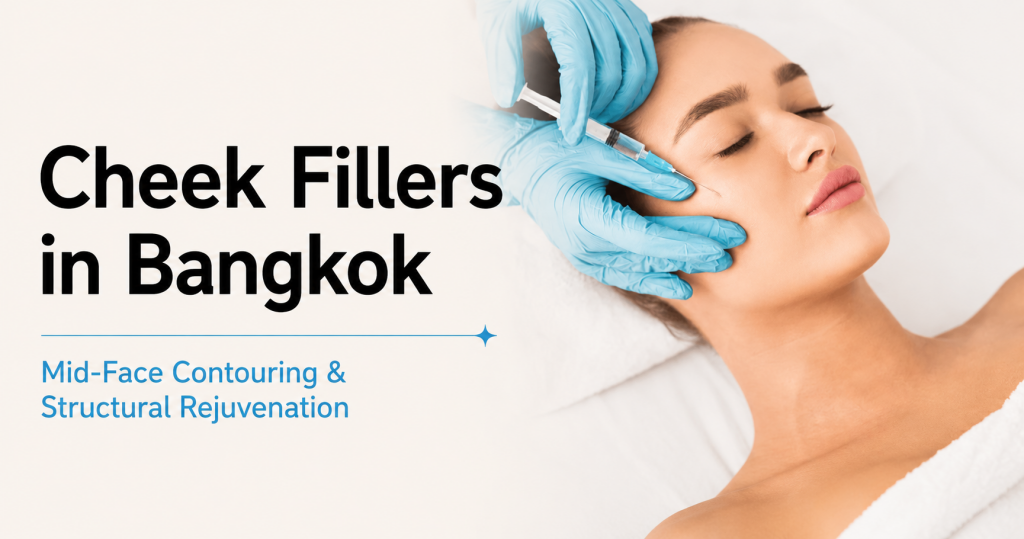
Cheek fillers are medical-grade hyaluronic acid (HA) injections placed by a physician at precise mid-face points to restore volume, enhance cheekbone projection and improve facial balance.
HA is a sugar molecule the body naturally uses to hold moisture; in filler form it is cross-linked into a gel that integrates with tissue and holds its shape. For the cheeks, denser, cohesive products — such as Juvederm Voluma, Restylane Lyft and Nuramis Volume — provide structural lift rather than surface hydration.
Cheek HA filler is reversible with hyaluronidase and typically lasts around 6 to 12 months.
The treatment process
- Whole-face assessment, including skin and structural analysis, before any product is chosen
- Numbing time, then precise placement at mid-face points using cannula or fine needle technique
- Conservative, staged volume — typically 1–2 cc per side — assessed as it is placed
- Immediate review of symmetry and lift, with hyaluronidase kept on-site as a safety net
- Aftercare guidance and a follow-up review once initial swelling has settled
The mid-face contains important vascular structures, so the physician’s technique and product choice matter more than the brand name alone. Individual results vary.
Who Is It Suitable For?
Good candidates include adults with mid-face volume loss, flattened cheeks or descended fat pads; deepening nasolabial folds caused by mid-face descent; a wish for cheekbone definition or a better profile; or an interest in conservative, early (“prejuvenation”) treatment.
It is generally not suitable in pregnancy or breastfeeding, with very heavy jowling or advanced sagging (where surgical assessment fits better), with active skin infection or inflammation, or with clotting disorders or anticoagulant medication (raised bruising and vascular risk). A physician always confirms individual suitability at consultation before any treatment plan is agreed.
Risks and side effects
- Swelling — peaks at 24–48 hours and can exaggerate the early result; typically settles within 1–2 weeks
- Bruising — occurs in roughly 15–25% of patients and generally resolves within 5–10 days
Individual results vary.
Results, Duration and Downtime
Some people notice a difference right after treatment, though the visible result settles fully once initial swelling resolves. How long results last varies by product, but generally ranges from 6 months to a year. Because HA longevity differs from person to person, periodic maintenance is sometimes recommended to keep the result consistent.
Most people return to normal activities the same day, with make-up typically fine from the next day once any pinpoint marks have settled. Strenuous exercise, saunas and facials are usually best avoided for around 48 hours.
Possible side effects
- Temporary swelling, tenderness or redness at injection points
- Bruising, more common with needle technique than cannula
- Rare: asymmetry, lumps, or vascular complications requiring prompt physician review
Choosing a physician who keeps hyaluronidase on-site meaningfully reduces the risk of a prolonged complication. Individual results vary.
Cheek Fillers vs. Other Options
Different tools solve different problems. The table below compares the main mid-face options.
| หัตถการ | What it does | Best for | Comment |
|---|---|---|---|
| Cheek filler (HA) | Immediate structural volume and lift | Volume loss, flat cheeks, nasolabial folds | Direct volume; reversible with hyaluronidase |
| Sculptra (PLLA) | Gradual collagen stimulation | Progressive mid-face firmness | Slow build; not an instant volumiser |
| HIFU / Ultherapy | Ultrasound skin tightening | Mild laxity, not volume loss | Tightens; does not add volume |
| Sylfirm X (RF microneedling) | Skin quality and texture | Texture, redness, not lifting | Complements filler; not structural |
| PRP treatment | Skin-quality support | Skin quality, combine with filler | Adjunct, not a volumiser |
| การยกกระชับผิวด้วยไหม | Mechanical lifting | Moderate sagging, no volume deficit | Lifts; pairs with filler for volume |
Scroll sideways to see more →
Cheek filler often pairs with skin-quality treatment such as Sylfirm X and with jawline and chin contouring for a balanced V-shape. Individual results vary.
Pricing at Bibi Clinic in Bangkok
Cheek filler is priced per product and per cc, and the cheeks usually need 1–2 cc per side. The cheek-relevant menu below is listed openly; your total dose and combined plan are confirmed at consultation, never estimated in advance.
| Product (1 cc) | Price (THB) | Note |
|---|---|---|
| Nuramis Volume | 6,500– | Cost-effective volumiser |
| Restylane Lyft | 13,800– | Structural mid-face lift |
| Juvederm Voluma | 14,800– | Dense, cohesive cheek volumiser |
Scroll sideways to see more →
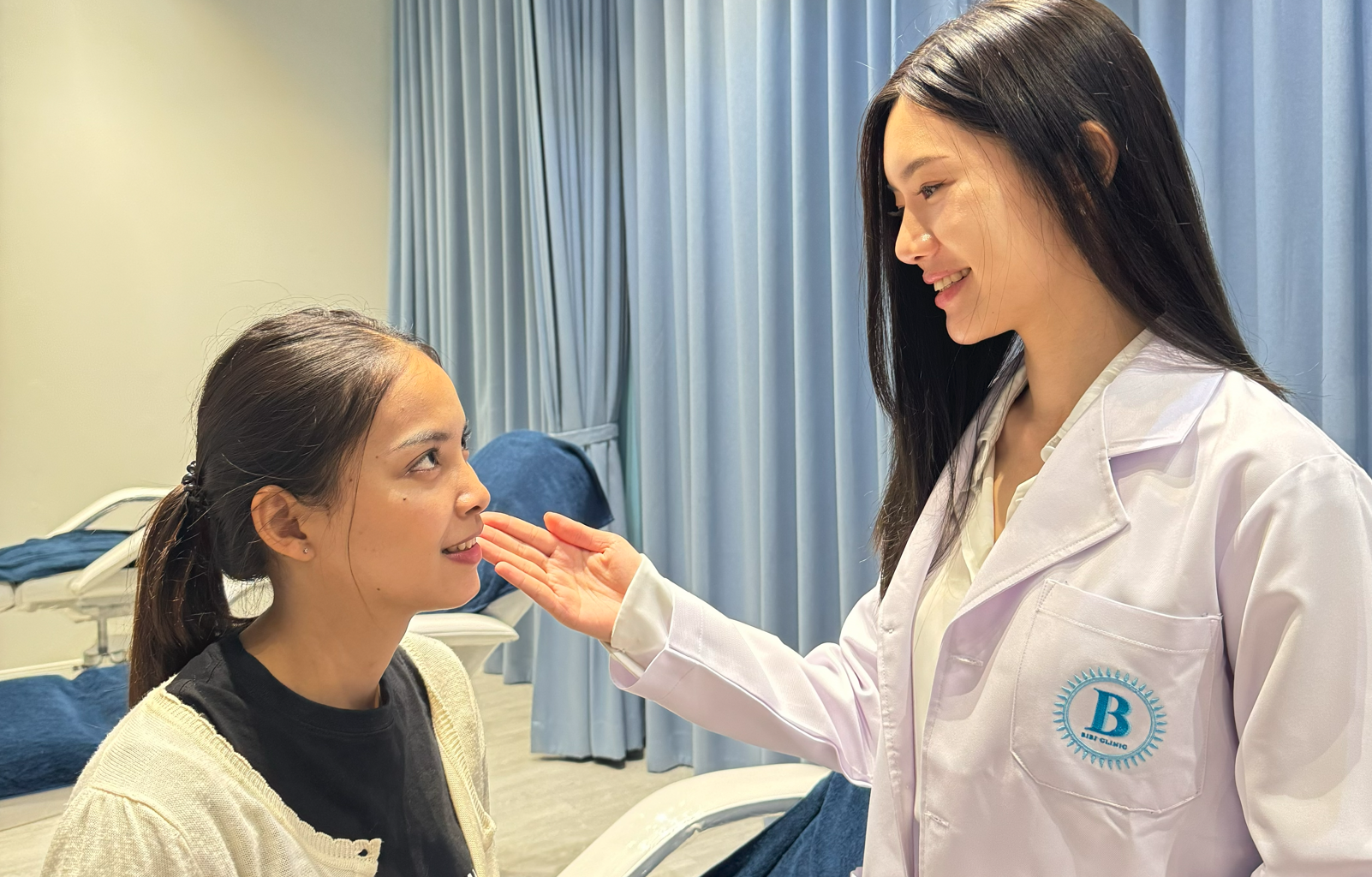
At Bibi Clinic, cheek filler begins with a whole-face assessment — with VISIA imaging where appropriate — then conservative, staged volume placed at precise points, with hyaluronidase on-site, following a Japanese-standard “refreshed, not altered” philosophy, with support in English, Japanese and Thai. For the full, current menu, see the filler treatment page.
Frequently Asked Questions
Will cheek fillers make my face look puffy or overdone?
Not with conservative placement. Puffiness is almost always the result of too much product or the wrong depth, which a whole-face, staged approach helps prevent. A review around two weeks later checks the result once swelling has settled.
Can I combine cheek filler with other treatments?
Yes — it is often combined with jawline and chin contouring, skin-quality treatment and tear-trough filler. Your physician advises on safe sequencing for your anatomy.
What if I had filler elsewhere and want it dissolved?
Where clinically appropriate, previous HA filler can be assessed and dissolved with hyaluronidase. This is increasingly requested by patients moving away from an over-filled look.
How soon will I see results, and is there downtime?
Some people notice a difference right after treatment. How long it lasts varies by product, but it generally ranges from six months to a year. Because HA longevity varies from person to person, regular maintenance is sometimes recommended to keep up the result.
Does the treatment hurt, and is anaesthesia used?
Most cheek filler products contain lidocaine, and topical numbing cream is typically applied beforehand, so discomfort is generally mild and brief. Your physician can adjust the approach if you are especially sensitive.
References
- Trévidic P, et al. Injection Guidelines for Treating Midface Volume Deficiency with HA Fillers (ATP Approach). Aesthetic Surgery Journal, 2022. academic.oup.com/asj/article/42/8/920/6510088
- Jones D, et al. Safety and Effectiveness of Hyaluronic Acid Filler, VYC-20L, via Cannula for Cheek Augmentation: A Randomized, Single-Blind, Controlled Study. PubMed, 2021. pubmed.ncbi.nlm.nih.gov/34743118
Ready to Take the First Step at Bibi Clinic?
The first step is always a free, no-obligation physician consultation.
Location: 3rd Floor, Hotel Nikko Bangkok, 27 Sukhumvit Soi 55 (Thonglor), Bangkok 10110
BTS: Thonglor Station — 3-minute walk
Hours: 9:00 AM – 8:00 PM daily
Language: English, Japanese, and Thai
LINE: @bibi.official | Instagram: bibi.clinic
Links: https://bibi-beauty.com/en/
Disclaimer: This article is for informational purposes only and does not constitute medical advice. Individual results vary. Please consult a qualified medical professional before undergoing any aesthetic treatment. Bibi Clinic’s physicians will assess your personal suitability during a consultation.
“`
แชร์


