
 LINE
LINE


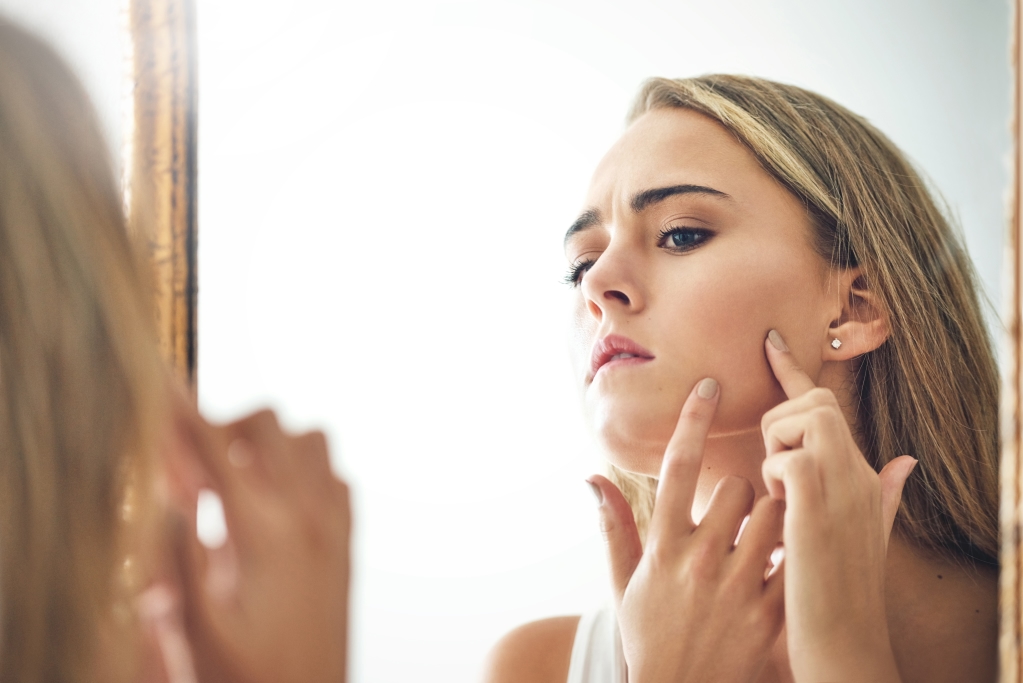
Even though the acne itself has healed, the brown marks that remain are difficult to get rid of… Do you have this concern? In reality, many people are concerned not only with healing acne but also with regaining clear skin.
This article will clearly explain the causes of acne scar hyperpigmentation, the limitations of self-care, and approaches using cosmetic procedures available in Bangkok, Thailand.
What is acne scar hyperpigmentation? Explanation of acne scar types
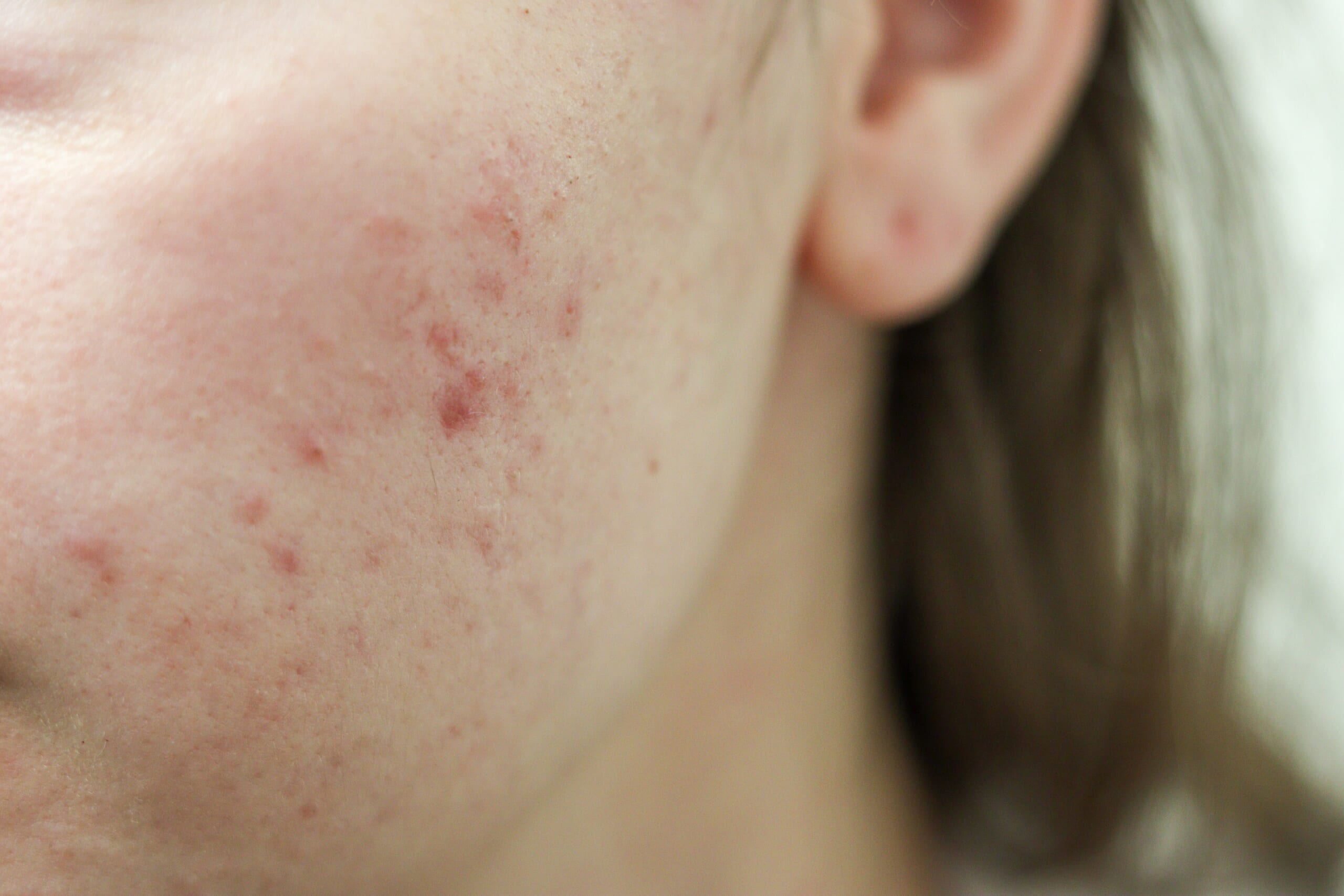
Even when acne calms down, the lingering scars can be a concern, right?
Many people struggle not so much with acne itself, but with the “scars” it leaves behind. They want to regain clear skin more than they want to cure acne.
That's why scars make you feel like "it's not healed yet."
Among these, the most bothersome are often the brown post-acne hyperpigmentation. However, what's important here is that not all acne scars are the same. The causes and treatments differ for redness, brown spots, and textured scars.
Acne scar hyperpigmentation is caused by post-inflammatory hyperpigmentation!
Acne scar pigmentation refers to a condition where melanin pigment remains on the skin after acne inflammation, causing a brownish appearance. This is medically termed "post-inflammatory hyperpigmentation."
When acne worsens and becomes inflamed, a reaction occurs in the skin to suppress the inflammation. In this process, melanin, which plays a role in protecting the skin, may be overproduced.
Melanin is normally gradually discharged with skin turnover. However, if the inflammation is severe or the skin's recovery is delayed, melanin will remain, leaving brown acne scars on the skin. If you have a situation where "the acne healed, but only a spot-like mark remained," it may be post-inflammatory hyperpigmentation.
Acne scars are not all the same | What's the difference between redness, brown marks, and indentations
Acne scars tend to be generalized, but in reality, there are several types.
- Red acne scars... a condition where capillaries are dilated due to inflammation.
- Brown acne scars... a state where melanin pigment remains
- Uneven acne scars (craters)... a condition where damage has reached the deep layers of the skin
If you continue with self-directed care like "treating dark spots because they're red" or "just moisturizing because they're brown" without understanding these differences, you might end up taking the long way around.
Depending on whether your acne scars are only brown, or if they also include redness and indentations, the necessary approach will change, so it's important to first understand your current skin condition.
Why do acne scars' hyperpigmentation not disappear?
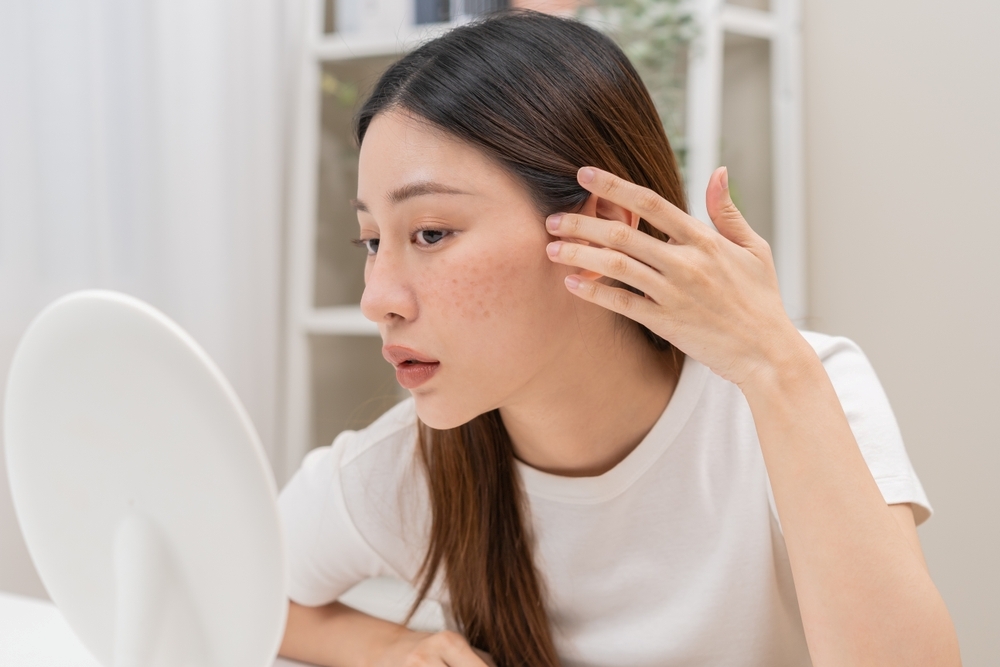
The reason why acne scars' pigmentation doesn't fade easily isn't solely due to the passage of time.
If you continue to be in a state where pigmentation is likely to remain, the turnover may not be able to keep up with excretion, and it may become difficult to notice changes with self-care.
How inflammation and melanin cause hyperpigmentation
When pimples swell or form pus, it means inflammation is occurring within your skin.
Melanin is produced to protect the skin from that inflammation.
Normally, melanin is gradually expelled as skin renews itself. However, if the inflammation is severe or if acne repeatedly occurs in the same spot, melanin tends to remain on the skin.
The result is hyperpigmentation that remains as brown acne scars. In other words, the skin is left with “traces of inflammation.”
UV rays and friction can cause acne scars to persist!
For those who feel that acne scars and hyperpigmentation are not fading, it's often the case that skin irritation is accumulating in daily life. Factors that require particular attention include the following:
- Expose yourself to ultraviolet rays
- Washing your face or cleansing while rubbing
- Touching or popping pimples
- Continue with harsh skincare.
- Leave dryness untreated
If these kinds of irritations continue, there's a risk that the pigmentation, which was beginning to fade, will become more difficult to remove.
For those living in Thailand, especially Bangkok, the intensity of UV rays is something not to be missed. Thailand has more days with stronger UV rays than Japan, making it an environment that can easily prolong hyperpigmentation from acne scars.
Mild pigmentation may fade naturally, but in the following cases, it may be difficult to improve with self-care alone.
- There has been almost no change for several months.
- A dark brown stain remains.
- I'm concerned about redness, pores, and uneven texture.
- I don't feel a change even with whitening care.
In this way, if you want to fix acne scars and hyperpigmentation as cleanly as possible, it's important to consider cosmetic treatments as an option, rather than just observing with skincare.
How to treat acne scar hyperpigmentation? Aim for skin with less noticeable scars through cosmetic treatments

Many people consider cosmetic treatments as an option when they want to improve acne scars and hyperpigmentation as much as possible.
However, cosmetic procedures vary widely, and many people may feel unsure about which one to choose.
What's important isn't just undergoing popular treatments, but choosing them while considering what's happening with your skin right now. The best treatment for you will change depending on whether your primary concern is pigmentation, redness, or if you want to improve pore size and skin texture.
At Bibi Clinic, the representative treatments that address acne scar hyperpigmentation are the Pico Laser and Sylfaen X.
Each has slightly different areas of expertise for concerns, so understanding the differences will make it easier to consider options that are right for you.
Acne scar pigmentation Approach 1: Pico Laser
Many people consider laser treatment for acne scar hyperpigmentation. Among these, pico lasers are often considered as an option.
Pico lasers have several treatment methods, and their characteristic is that they are used differently depending on the depth of pigmentation of acne scars and the skin condition.
▽Main Pico Laser Treatment Methods
- Pico SpotA method used to target melanin pigment precisely on intensely remaining hyperpigmentation.
- Pico Toning... a method of applying low-energy, wide-area irradiation to thin, diffuse pigmentation and uneven skin tone
- Pico Fractional... a method considered for improving uneven acne scars, pores, and skin texture by applying micro-stimulation to the skin.
This way, even with the same picosecond laser, the optimal irradiation method may change depending on whether you want to target dark colors, even out overall skin tone, or address unevenness and texture.
▶Bibi Clinic's pico laser isthis way (direction close to the speaker or towards the speaker)
Acne scar hyperpigmentation treatment approach #2: Sylfirm X
Silfrorm X is an option when you want to improve not only acne scar hyperpigmentation but also redness and skin texture.
Silfirm X is a device that uses radiofrequency (RF) and microneedling. It is a treatment considered for improving skin texture by reaching the dermis, deep within the skin.
In particular, it can be an option in cases such as "in addition to brown marks, there is also redness" or "I want to improve pores and texture along with pigmentation."
This treatment is also suitable for those who want a procedure that has little impact on their daily lives because it minimizes skin damage.
▶Bibi Clinic's Silpharm X isthis way (direction close to the speaker or towards the speaker)
How to choose between Pico Laser and Sylfirm X for acne scar hyperpigmentation treatment?
When considering how to approach acne scars and hyperpigmentation, it's easy to get sidetracked by the question of "which one is right for me?" In reality, the best option can change depending on what you want to prioritize.
- Pico laser…Acne scars, hyperpigmentation, etc. Options for when “color” is the priority
- Sylfirm XIn addition to color, options for broadly addressing redness, skin texture, and pores
This way, the most suitable treatment may change depending on whether you want to adjust only the color or the overall appearance of the skin. Therefore, it is important to consider what you want to prioritize, rather than judging by the treatment name.
At Bibi Clinic, we assess your skin condition using tools like the VISIA® skin analysis machine to determine whether the primary concern is pigmentation, or if redness, pores, or uneven skin texture are also contributing factors, before considering treatment.
We offer flexible treatment options beyond just Pico Laser and Sylpharm X, including a wide range of other procedures based on your skin condition, to address your specific concerns.
Treating acne scar pigmentation requires addressing the cause!
The brown marks that remain after acne has healed may not just be “healing” but could be post-acne hyperpigmentation. When treating post-acne hyperpigmentation, it's important not to lump redness, brown spots, and uneven texture together.
Of course, wanting to clear up acne is natural, as is wanting to return to beautiful skin.
If you're feeling that "acne scars and pigmentation aren't getting better" or that "self-care has its limits," instead of keeping it to yourself and making a self-diagnosis, it might be a good idea to organize your skin's condition. If you're concerned about acne scars and pigmentation in Bangkok, Thailand, it's a good idea to have your skin condition checked first.
▶For consultations and appointments at Bibi Clinic, please contact us.Click here
share


