 LINE
LINE



Medically reviewed by
Dr. Pim Thaweewitayarut — Board-Certified Dermatologist
MSc in Dermatology, King’s College London · Best Thesis Award in Acne Treatment
What You’ll Learn in This Article
- How Diode Lasers Work and Their Benefits.
- Diode vs. Alexandrite vs. Nd:YAG (often simply called YAG).
- Costs, sessions, and realistic results.
- Whether it’s painless and safe for people with dark skin.
Diode laser hair removal is a medical treatment that uses laser light to reduce unwanted hair over the long term. It works by targeting the melanin in the hair follicle and converting it into heat, which gradually inhibits new hair growth. This method balances effective results with comfort and is generally suitable for a wide range of skin tones, from the underarms to the entire body.
Most people simply want to shave less often, have fewer ingrown hairs, and enjoy smoother skin. If you’re comparing laser types, costs, and results before booking, this guide explains it clearly.
Table of Contents

The Short Answer
Diode laser hair removal directs laser light into the hair, where the pigment absorbs it as heat and damages the follicle’s growth structures, so the hair that does grow back is generally finer and sparser. It is this balance between melanin absorption and penetration depth that makes the diode laser a versatile option, effective across a wide range of skin tones and over larger areas.
Compared with alexandrite lasers, which work best on lighter skin, and Nd:YAG (often simply called YAG), which tends to be the preferred choice for very dark skin, a multi-wavelength diode laser like the ELITE 4D It sits comfortably in the middle as a strong all-rounder, and generally works well on tanned and medium-dark skin. Plan on roughly 6 to 12 sessions for long-term reduction.
What Is Diode Laser Hair Removal?
Diode laser hair removal is a medical procedure. In Thailand, this means it can only be performed at a clinic by a doctor or under a doctor’s supervision, rather than at a beauty salon. It works through a process called selective photothermolysis: light is absorbed by the melanin in your hair, converted into heat, and damages the hair follicle’s growth structures, so over a series of sessions, the hair regrows finer and sparser.[1]
The term “diode” refers to the semiconductor light source that generates the laser. This type of light strikes a balance between melanin absorption and deeper penetration, meaning it can reach coarse, deep-rooted follicles and treat large areas efficiently. The ELITE 4D used at the clinic takes this a step further with four wavelengths, allowing it to effectively treat everything from fine to coarse hair while remaining suitable for use on tanned or darker skin.
The Treatment Process
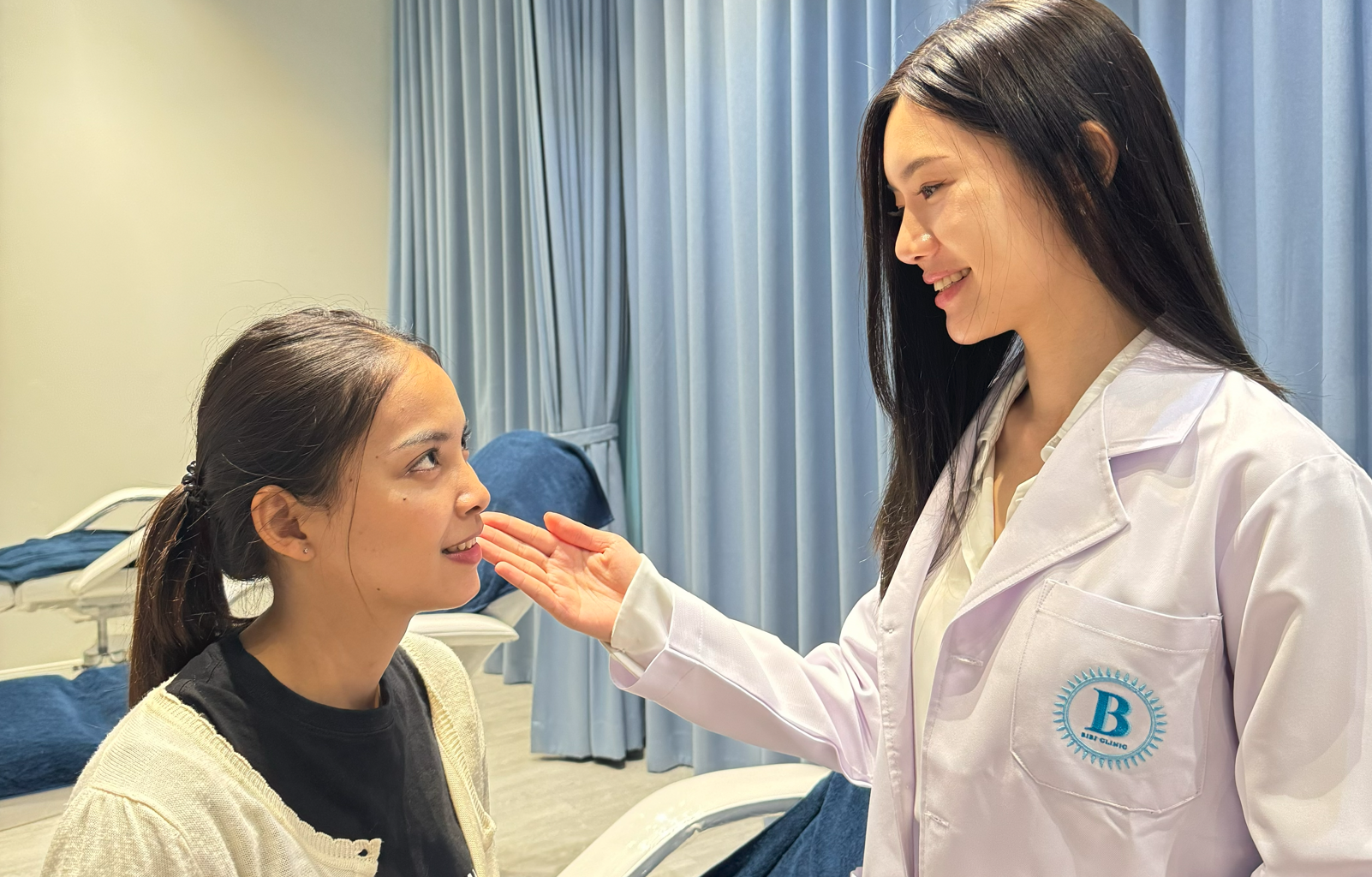
- Consultation and skin assessment, Since laser treatment is a medical procedure that requires a doctor’s supervision in Thailand.
- Patch Test to determine a safe energy setting for your skin tone and hair type.
- Session (about 15–90 minutes) Depending on the area, use the ELITE 4D’s built-in cooling feature for comfort.
- Gradual shedding of treated hairs over the next two to three weeks, with the treatment repeated every 3 weeks to 2 months.
Who Is It Suitable For?
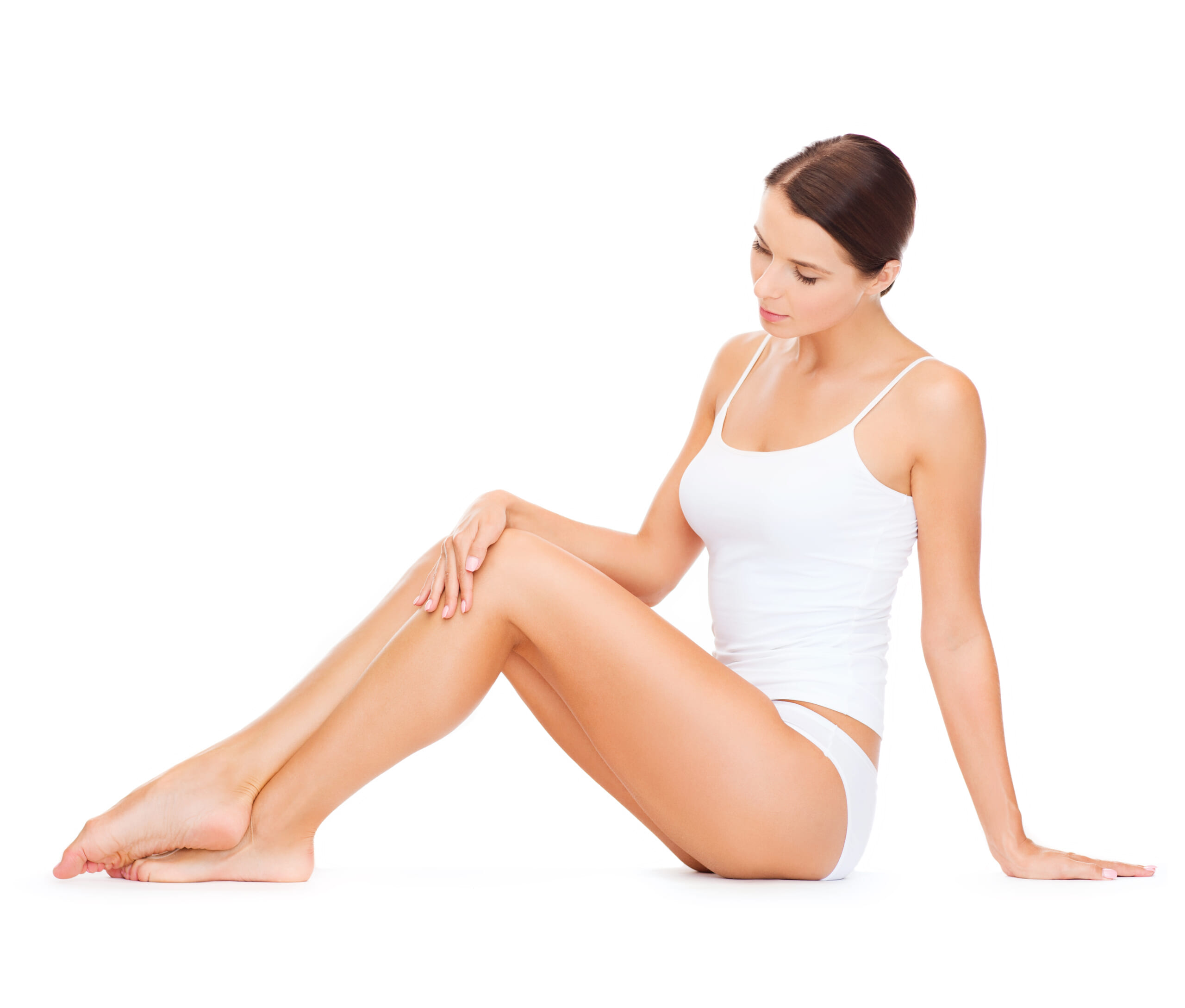
Diode laser hair removal is generally suitable for adults with a wide range of skin tones (Fitzpatrick I–V) who are looking for long-lasting hair reduction rather than a one-time solution, and who are willing to commit to a course of multiple sessions. It works best when the hair contains enough pigment for the laser to target—very light, white, or gray hair does not respond well to the treatment.
A physician’s evaluation is required first if you have active skin infections or open wounds in the treatment area, a history of keloid scarring, are taking certain photosensitizing medications, or are pregnant. Very dark skin may be better suited to a longer wavelength, such as Nd:YAG; your physician can advise you on this during your consultation.
Benefits, Results, and Downtime
The benefits generally go beyond just appearance: fewer ingrown hairs, razor bumps, and shaving irritation over time; cleaner-looking pores as trapped sebum and dirt around the hair are reduced; significant time savings compared to daily shaving; and a long-term reduction in hair growth, with the remaining hair typically becoming finer and lighter.
What the before-and-after results realistically look like: after 1–3 sessions, visible thinning and slower regrowth; midway through the course (around 4–6 sessions), patchy clearance as follicles go through their growth cycles at different times; after the full course, a stable, long-term reduction. Change occurs gradually over the course of the sessions rather than overnight—peer-reviewed studies report a reduction of roughly 50–70% after a few sessions, with further improvement throughout the full course.[2] This is a realistic estimate, not a guarantee, and individual results may vary.
Possible side effects
- Mild redness, warmth, or itching in the treated area, which usually subsides within a few hours.
- Small bumps around the hair follicles (folliculitis), which typically clear up within a day or two.
- Less commonly: temporary changes in skin pigmentation on tanned or sun-exposed areas, paradoxical hair growth, or burns/blistering—rare when parameters are set correctly by a physician.
Diode vs. Alexandrite vs. Nd:YAG
The most important factor in safe, effective treatment is matching the wavelength to your skin tone, not the brand of the device. Across controlled trials, lasers generally outperform shaving and waxing and become more effective with repeated sessions, and longer-wavelength options are generally preferred over alexandrite lasers for darker skin tones.[1,2] Here is a practical example.
| Laser Type | Best Skin Tones | Comment |
|---|---|---|
| Diode | Light to darker (I–V) | The most versatile all-rounder; works well on coarse hair and tanned skin |
| Alexandrite | Light (I–III) | Fast on light skin with dark hair; higher risk of hyperpigmentation on dark skin |
| Nd:YAG (often simply referred to as YAG) | Dark (IV–VI) | Best for very dark skin; less effective on fine hair, may sting more |
| IPL (salon) | Light only | Not a true laser; generally weaker, temporary, and riskier on dark skin |
Scroll sideways to see more →
Choosing a Clinic in Bangkok
| Factor | What to Look For | Comment |
|---|---|---|
| Who operates the laser? | A doctor, or a nurse under medical supervision | In Thailand, laser treatment is a medical procedure, not a salon service. |
| Skin-tone safety | Tested the patch and adjusted the settings for darker skin tones | The single most important factor in preventing pigment problems |
| Languages | Support for English, Japanese, and Thai | Clear consent and aftercare that you actually understand |
| Pricing & Aftercare | Transparent menu; on-site medical follow-up care | It matters whether the redness or folliculitis needs to be treated |
Scroll sideways to see more →
This is exactly where Bibi Clinic comes in: physician-led care that meets Japanese standards, an ELITE 4D multi-wavelength diode laser suitable for tanned and darker skin, a clear and transparent menu of services, and consultations available in English, Japanese, or Thai.
What Patients Say
“I had a wonderful experience at Bibi Clinic. It was my first time getting laser hair removal, and the staff were so kind… I had a full-body treatment that included my chest, back, stomach, and shoulders. I’m 193 cm tall and have thick hair, yet the whole thing took less than an hour.”
“Perfect! Such careful, attentive service… My technician took her time, always making sure to cool the area thoroughly before testing, and checked carefully to see if I felt any pain, wanted the laser intensity increased or decreased, and was comfortable.”
“This was my first time here for hair removal. Great privacy, very clean, and surprisingly, it wasn’t painful at all. My previous experiences elsewhere were really painful, so this was a big plus.”
Pricing at Bibi Clinic in Bangkok
Bangkok is one of the most competitive markets for laser treatments, so many residents and travelers take courses here. Below is a clear menu to help you plan; please confirm the exact treatment areas and full course pricing during your consultation—prices are never estimated in advance.
| Treatment Menu | Price (THB) | Notes |
|---|---|---|
| First-time trial (1 area) | 700 | Up to 3 areas; a low-risk way to test comfort |
| Face for Women (First-Time Trial) | 990 | Full-Face Finishing |
| Beard / Mustache for Men (First-Time Trial) | 990 | Beard-line shaping, razor-bump relief |
| Women’s VIO (First-Time Trial) | 990 | Bikini / Brazilian Shaping |
| VIO + underarms (women, first-time trial) | 1,190 | Common combinations |
| Full body | Upon consultation | Pricing available upon request |
Scroll sideways to see more →
Most areas require about 6 to 12 sessions, spaced every 3 weeks to 2 months, since the laser primarily targets hairs in their active growth phase. Each session lasts 15–90 minutes, depending on the area; you can bathe and wash your hair on the same day, but you should avoid saunas and long hot baths that day. For the complete, up-to-date menu, see the Treatment Menu and Price List.
Frequently Asked Questions
Is a diode laser better than an alexandrite laser?
Neither is universally better; the right choice depends on your skin tone and hair. Alexandrite is fast on light skin with dark hair but carries more risk on darker skin, while diode lasers balance absorption and depth across a wider range. A multi-wavelength diode laser covers the widest range, which is why it’s a common first choice for mixed skin tones.
Is diode laser hair removal safe for dark skin?
Generally, yes, provided the device and settings are chosen carefully. Darker skin contains more pigment, so using conservative settings after a test patch reduces the risk of burns or changes in pigmentation, and very dark skin may be treated with a longer wavelength. A skin assessment is always the first step.
Is diode laser hair removal painless?
It’s more a matter of minimal discomfort than being truly painless—most people feel a quick, warm snap, which is strongest in coarser areas. The built-in cooling system reduces the heat with each pulse, making treatment in sensitive areas more manageable, and numbing options can be discussed.
How much does diode laser hair removal cost in Bangkok?
It depends on the area and the number of sessions. A first-time trial session costs 700 THB per area (up to three), while treatments for the face, beard, and women’s VIO start at 990 THB, and full-body treatments are priced based on a consultation.
How many sessions will I need?
For most areas, plan on roughly 6 to 12 sessions, spaced about every 3 weeks to 2 months, since the laser only affects follicles in their active growth phase. Coarse or hormone-driven hair falls on the higher end of that range. Occasional maintenance sessions afterward can help keep the results looking their best.
References
- Haedersdal M, Wulf HC. Evidence-based review of hair removal using lasers and light sources. J Eur Acad Dermatol Venereol, 2006. https://pubmed.ncbi.nlm.nih.gov/16405602/
- Meta-analysis of laser hair removal trials (diode, Nd:YAG, alexandrite, ruby). 2008. https://pubmed.ncbi.nlm.nih.gov/18027066/
Ready to Take the First Step at Bibi Clinic?
The first step is always a free, no-obligation consultation with a physician.
Location: 3rd Floor, Hotel Nikko Bangkok, 27 Sukhumvit Soi 55 (Thonglor), Bangkok 10110
BTS: Thonglor Station — 3-minute walk
Hours: 9:00 AM – 8:00 PM daily
Languages: English, Japanese, and Thai
LINE: @bibi.official | Instagram: bibi.clinic
Links: https://bibi-beauty.com/en/
Disclaimer: This article is for informational purposes only and does not constitute medical advice. Individual results may vary. Please consult a qualified medical professional before undergoing any aesthetic treatment. Bibi Clinic’s physicians will assess your personal suitability during a consultation.


