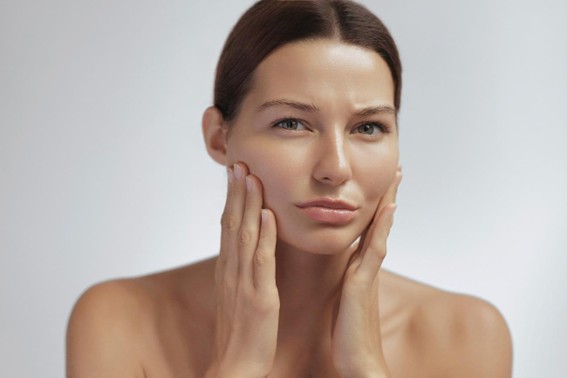
SEARCH BY PROBLEM
pigmentation
Frictional lentiginosis (frictional melanosis)
Melanin pigmentation is a darkening of the skin due to melanin deposition caused by repeated irritation from friction. Unlike most blemishes, melanin pigmentation is often hazy black or brown in color and tends to occur more frequently in dark-skinned people. In the early stages, melanin pigment stays in the epidermis, but as the disease progresses, it deposits in the dermis and becomes difficult to approach.
Post Inflammatory Hyperpigmentation (PIH)
A condition in which inflammation of the skin triggers excessive production of melanin pigment, resulting in hyperpigmentation. It is characterized by the appearance of brown spots after the redness caused by inflammation has subsided. It tends to occur more frequently in people with fair skin, dry skin, and those with disordered lifestyles. Most of them fade gradually over time, but depending on the severity of the condition, a cosmetic medical approach may be an option.
Pigmentation has a different cause and mechanism of occurrence than common spots and dark spots.
Pigmentation is caused by external factors and differs from spots and dullness in cause and the layers in which it occurs.
Pigmentation and dark spots are often confused, but they have different causes.
Pigmentation is caused by external factors such as friction, pressure, and inflammation, and occurs mainly on the epidermis, the outer layer of the skin, and in some cases extends to the upper dermis, the layer below the epidermis.
On the other hand, senile pigmentation, a common type of pigmentation, is caused by internal factors such as changes in skin function due to aging, in addition to the effects of UV rays over many years. It is characterized by the accumulation of melanin in the epidermis due to a combination of external and internal factors.
Dullness is also caused by the accumulation of unwanted keratin due to poor blood circulation, dryness, and disruption of skin turnover.
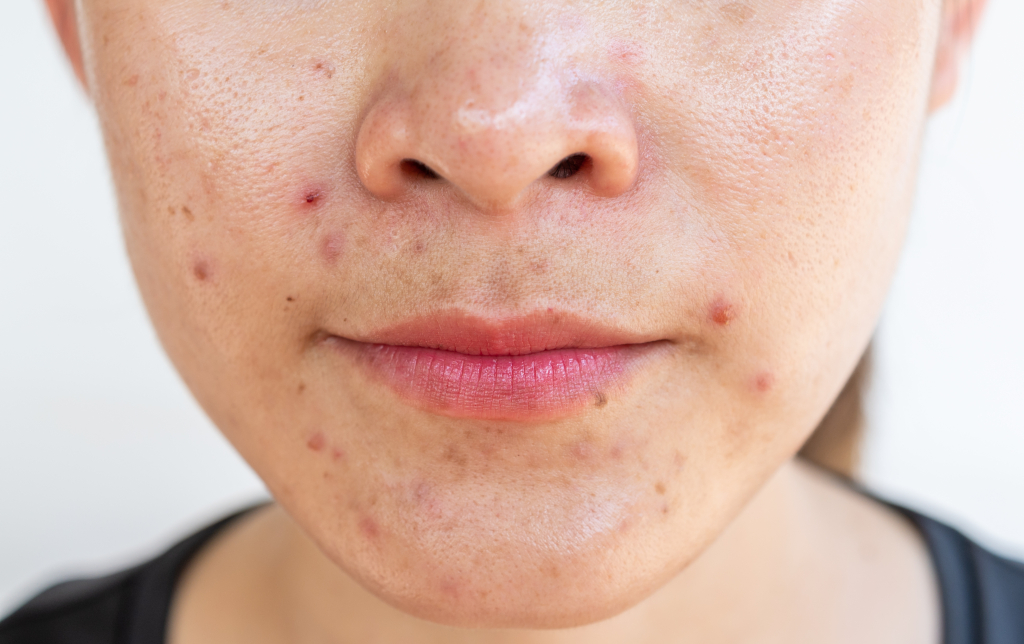
Pigmentation is caused by external factors such as friction, pressure, and inflammation, and occurs mainly on the epidermis, the outer layer of the skin, and in some cases extends to the upper dermis, the layer below the epidermis.
On the other hand, senile pigmentation, a common type of pigmentation, is caused by internal factors such as changes in skin function due to aging, in addition to the effects of UV rays over many years. It is characterized by the accumulation of melanin in the epidermis due to a combination of external and internal factors.
Dullness is also caused by the accumulation of unwanted keratin due to poor blood circulation, dryness, and disruption of skin turnover.
Friction lentiginosis is caused by friction and pressure
Frictional lentiginosis is caused by mechanical irritation such as friction or pressure that results in hyperpigmentation. Repeated application of strong stimuli to the same area causes melanin pigmentation to extend into the dermis.
For example,
. Scrubbing when washing or cleansing face.
...Rubbing the face hard with cleansing sheets, towels, etc.
They apply lotion and milky lotion as if they were slapping it on.
The makeup base or concealer is applied by pressing down hard with the fingers.
...Makeup is applied with a puff or brush that scrubs the skin surface.
Mask straps, eyeglass nose pads, etc., which put pressure on the skin on a daily basis.
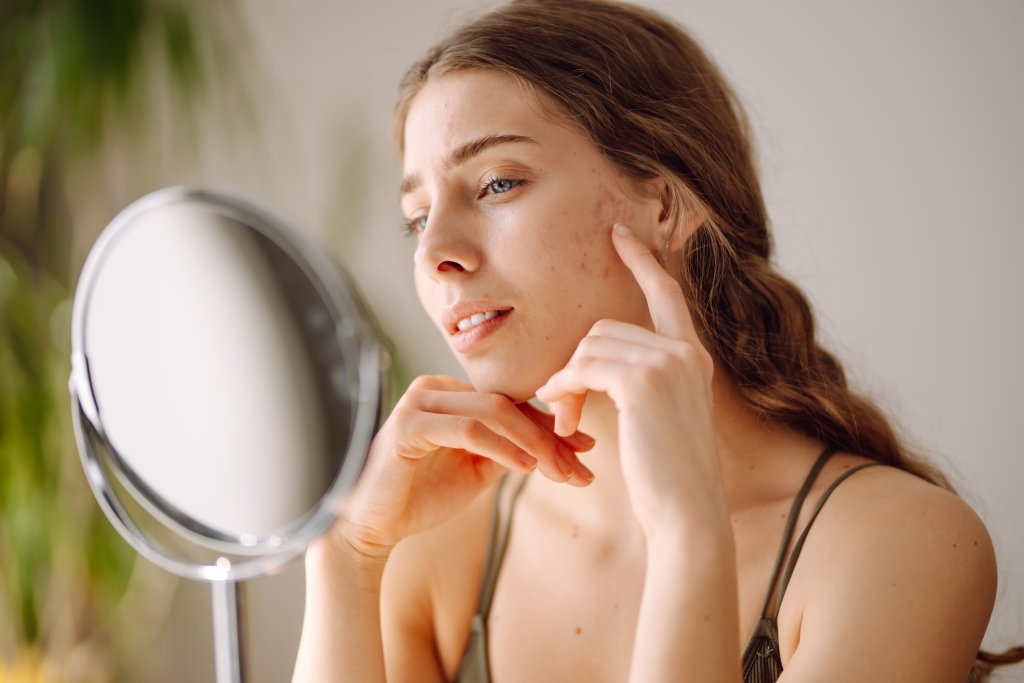
Habit of using cheekbones or frequently touching certain areas of the face.
who are prone to frictional lentiginosis.
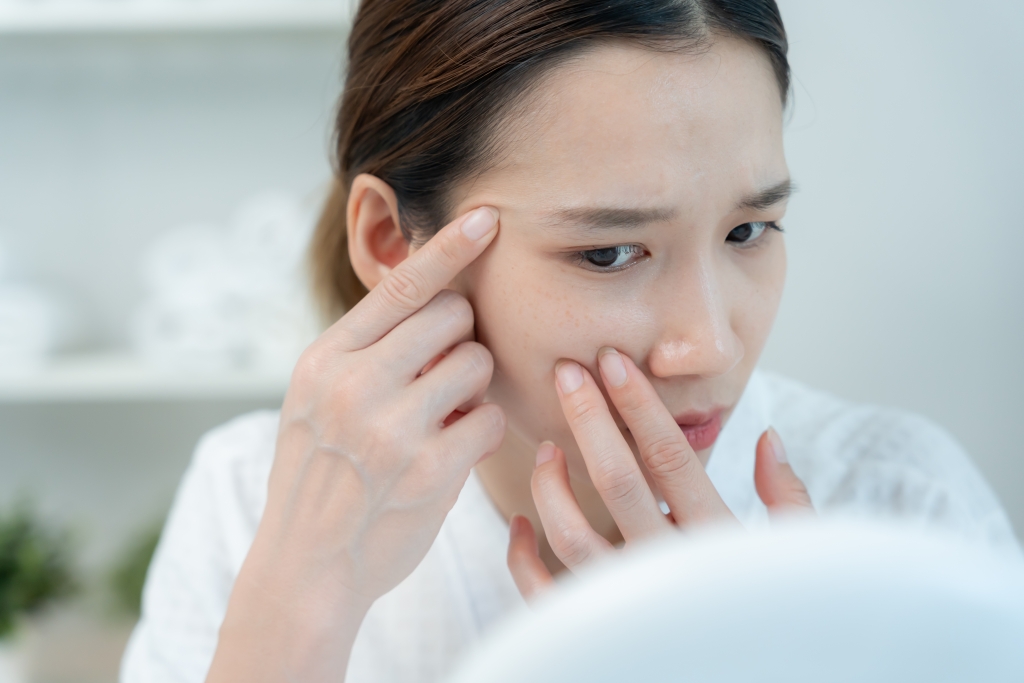
For example,
. Scrubbing when washing or cleansing face.
...Rubbing the face hard with cleansing sheets, towels, etc.
They apply lotion and milky lotion as if they were slapping it on.
The makeup base or concealer is applied by pressing down hard with the fingers.
...Makeup is applied with a puff or brush that scrubs the skin surface.
Mask straps, eyeglass nose pads, etc., which put pressure on the skin on a daily basis.
Habit of using cheekbones or frequently touching certain areas of the face.
who are prone to frictional lentiginosis.
Post-inflammatory hyperpigmentation is caused by inflammation
Post-inflammatory hyperpigmentation, as the name implies, is caused by inflammation due to irritation or damage to the skin. The inflammatory response stimulates cells called melanocytes in the epidermis, resulting in excessive production of melanin pigment.
There are two major causes of post-inflammatory hyperpigmentation
.
Post-inflammatory hyperpigmentation may occur due to inflammation such as acne, allergic dermatitis, eczema, insect bites, cuts, burns, etc., which are clearly visible.
Chronic inflammation that is difficult to see.
Post-inflammatory hyperpigmentation may also occur in cases of chronic inflammation that is difficult to see, such as scrubbing, skin care with harsh cosmetics, and use of hair pullers.
Post-inflammatory hyperpigmentation may also occur after laser stain removal, but it is usually temporary and settles gradually.
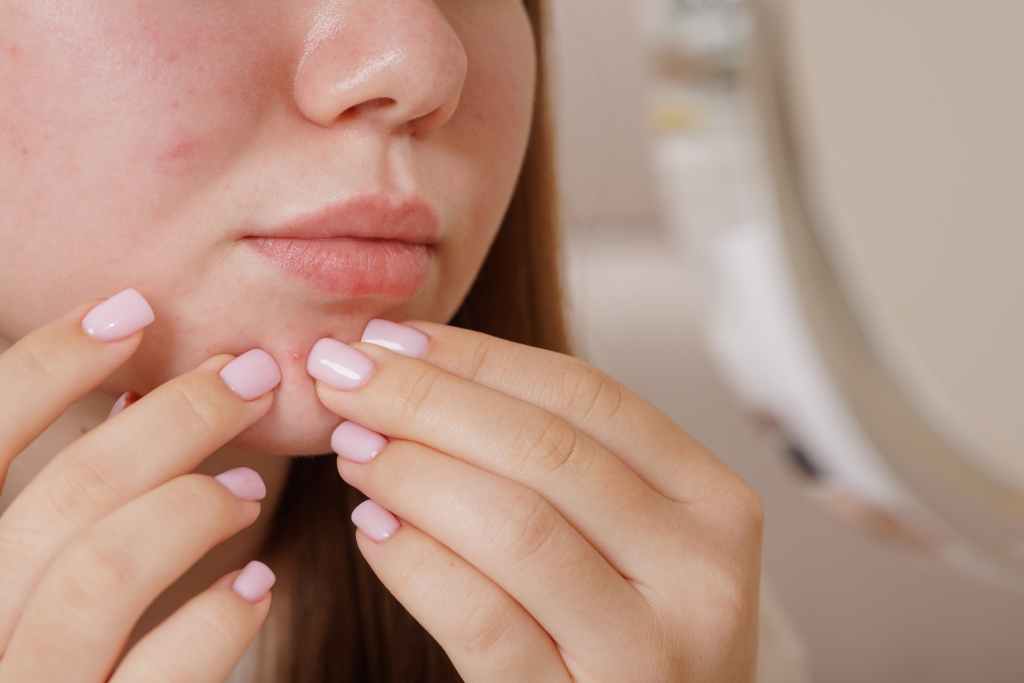
There are two major causes of post-inflammatory hyperpigmentation
.
Post-inflammatory hyperpigmentation may occur due to inflammation such as acne, allergic dermatitis, eczema, insect bites, cuts, burns, etc., which are clearly visible.
Chronic inflammation that is difficult to see.
Post-inflammatory hyperpigmentation may also occur in cases of chronic inflammation that is difficult to see, such as scrubbing, skin care with harsh cosmetics, and use of hair pullers.
Post-inflammatory hyperpigmentation may also occur after laser stain removal, but it is usually temporary and settles gradually.
Appropriate treatment is proposed according to the type of pigmentation and skin condition.
In some cases, it is difficult to accurately detect the state of pigmentation with the naked eye alone. Therefore, Vivi Clinic performs precise skin analysis using the VISIA® skin diagnostic machine. Color and UV photographs are taken simultaneously to visualize the skin from the surface to the interior of the skin with numerical values and images.
We will propose appropriate treatments based on comprehensive consideration of wrinkles, pores, acne, and skin age.
For those who are considering treatment for skin problems other than pigmentation, we also offer the "Skin Management Personal Care Plan," a fixed price plan that allows you to freely combine treatments from a wide variety of plans. We can also provide professional advice through our "Skin Care Consultation" for those who would like to perform self-care that suits their own needs along with the treatment.
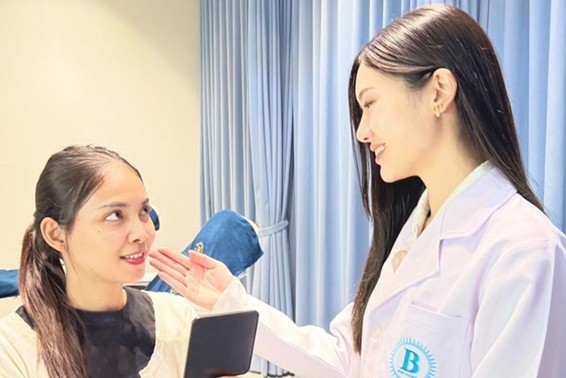
We will propose appropriate treatments based on comprehensive consideration of wrinkles, pores, acne, and skin age.
For those who are considering treatment for skin problems other than pigmentation, we also offer the "Skin Management Personal Care Plan," a fixed price plan that allows you to freely combine treatments from a wide variety of plans. We can also provide professional advice through our "Skin Care Consultation" for those who would like to perform self-care that suits their own needs along with the treatment.
Approach the upper epidermis layer where hyperpigmentation occurs with peeling and device treatments.
Bibi Clinic offers a variety of procedures to address pigmentation concerns.
<Peeling
This treatment supports the skin's metabolic function while softening and toning the stratum corneum through the action of the drug, rather than strongly exfoliating the skin's surface.
It is expected to gently remove the accumulation of dead skin cells and regulate the rhythm of turnover, thereby promoting melanin elimination. This treatment is chosen when post-inflammatory hyperpigmentation is mild or when the overall dullness of the skin is desired.
<Device treatment
A treatment that uses energy devices such as lasers and radiofrequency waves to approach melanin in the skin in a stepwise manner.
There are methods such as irradiating a wide area at low power to break down melanin little by little, or combining microneedling and radiofrequency to approach post-inflammatory hyperpigmentation. The treatment is performed while adjusting the output and number of times according to the condition.
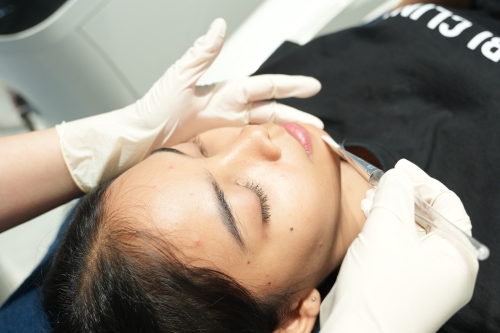
<Peeling
This treatment supports the skin's metabolic function while softening and toning the stratum corneum through the action of the drug, rather than strongly exfoliating the skin's surface.
It is expected to gently remove the accumulation of dead skin cells and regulate the rhythm of turnover, thereby promoting melanin elimination. This treatment is chosen when post-inflammatory hyperpigmentation is mild or when the overall dullness of the skin is desired.
<Device treatment
A treatment that uses energy devices such as lasers and radiofrequency waves to approach melanin in the skin in a stepwise manner.
There are methods such as irradiating a wide area at low power to break down melanin little by little, or combining microneedling and radiofrequency to approach post-inflammatory hyperpigmentation. The treatment is performed while adjusting the output and number of times according to the condition.
We also offer treatments that regulate the skin from the inside out and support turnover.
If pigmentation is present, it is important to approach the melanin pigment as well as to adjust the skin from the inside and support turnover. At Bibi Clinic, we also offer treatments that prepare the skin from the foundation up.
<Skin booster (skin growth injection)
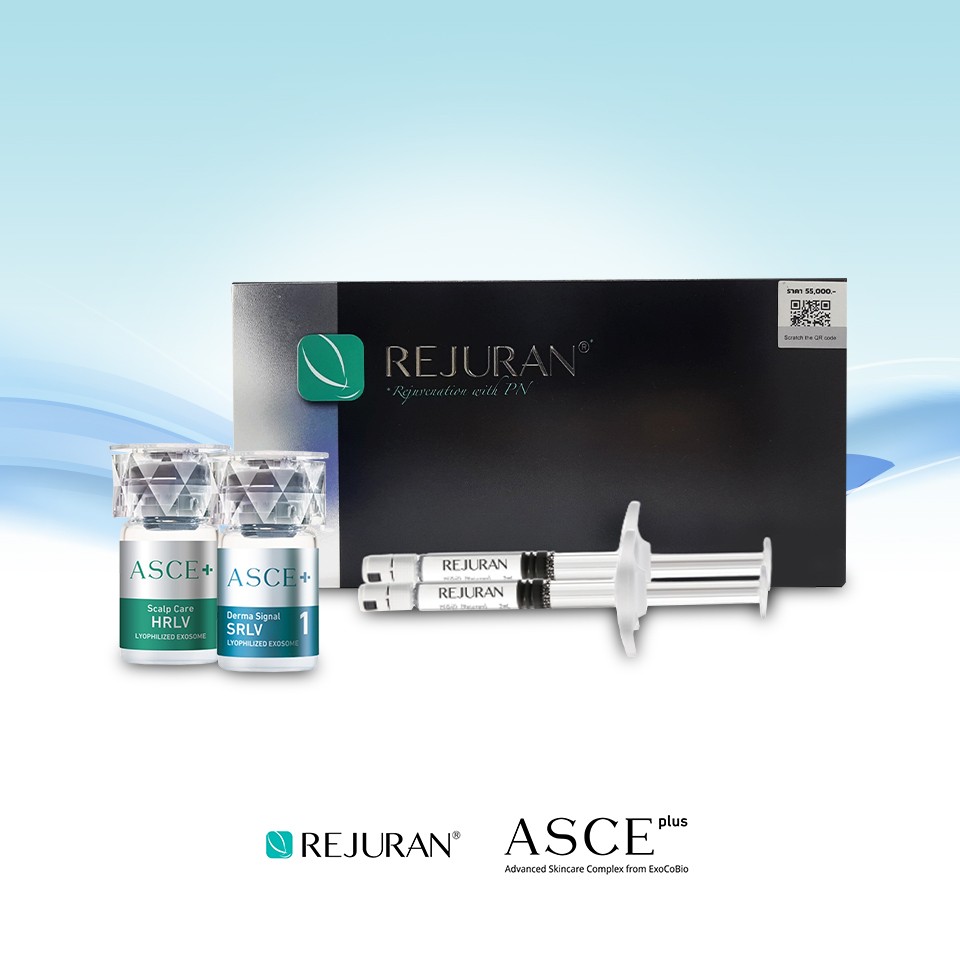
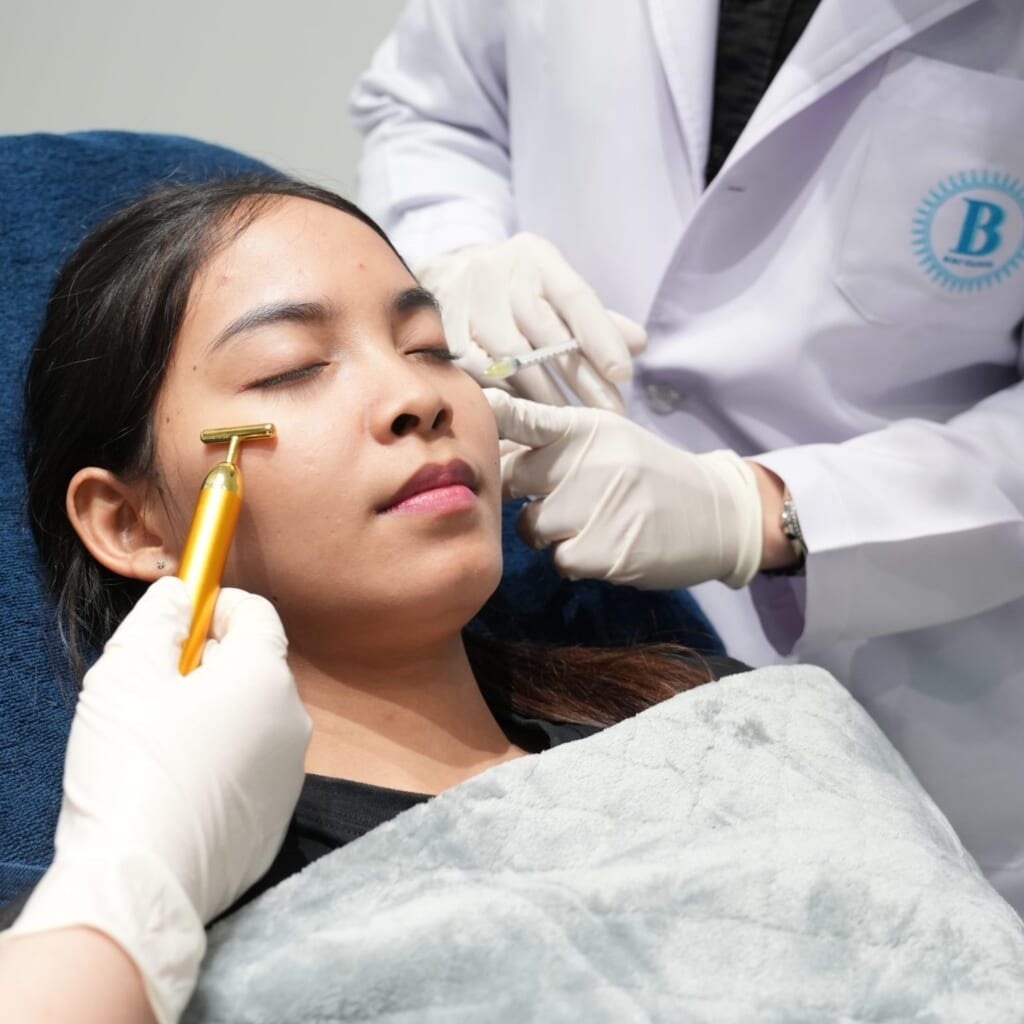
Skin booster is a procedure that aims to regulate the skin environment from the inside by directly injecting necessary ingredients into the skin, and is also called skin growth injection. For post-inflammatory hyperpigmentation, it is used to improve the condition of skin disrupted by inflammation and to support turnover. There are various types of formulations, including those that contain bio-derived ingredients to support the skin's regenerative environment and those that contain growth factor-like ingredients to support information transmission between cells, aiming to reduce the appearance of pigmentation by regulating the metabolic function of the entire skin. This is one of the treatments selected according to symptoms and skin type.
<Cosmetic infusion
Aesthetic infusion is a procedure that aims to improve the skin environment from within the body. For post-inflammatory hyperpigmentation, it is expected to support the condition of the skin from the inside by supplementing ingredients that are believed to be involved in the melanin production process and ingredients with antioxidant properties. Some types of infusions contain ingredients such as glutathione, which is believed to be involved in the process of melanin production, and vitamins, which are necessary for maintaining healthy skin. Supplementation with these ingredients can approach skin turnover. In some cases, they are used in conjunction with topical treatments or device treatments.
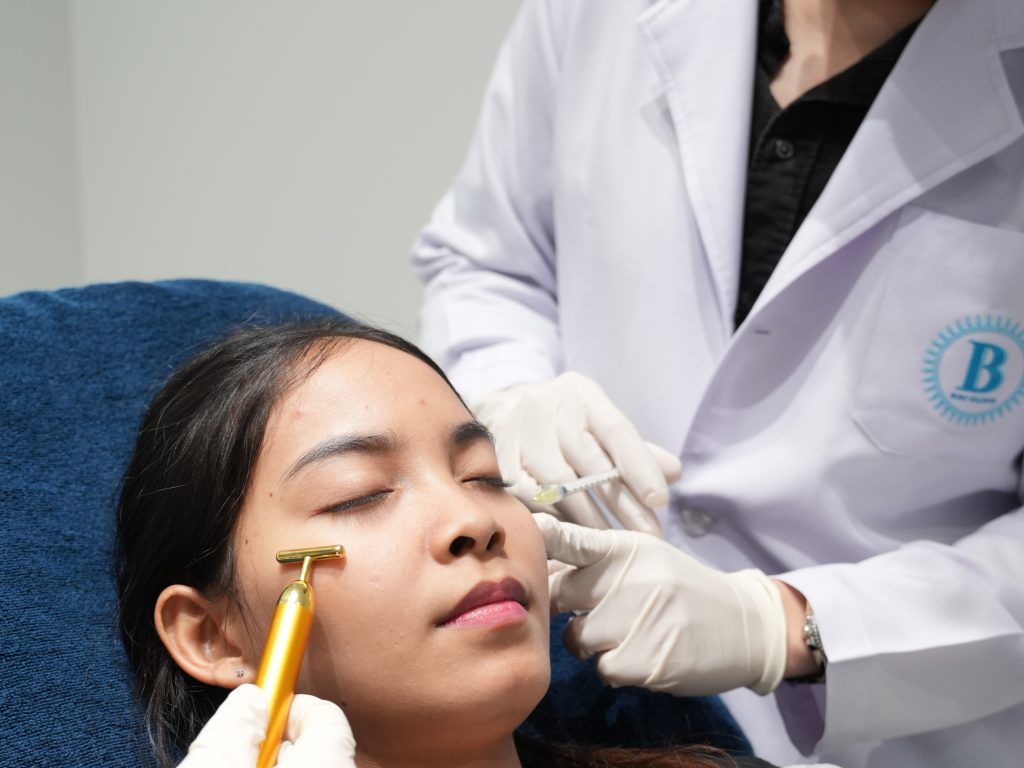
<Skin booster (skin growth injection)
Skin booster is a procedure that aims to regulate the skin environment from the inside by directly injecting necessary ingredients into the skin, and is also called skin growth injection. For post-inflammatory hyperpigmentation, it is used to improve the condition of skin disrupted by inflammation and to support turnover. There are various types of formulations, including those that contain bio-derived ingredients to support the skin's regenerative environment and those that contain growth factor-like ingredients to support information transmission between cells, aiming to reduce the appearance of pigmentation by regulating the metabolic function of the entire skin. This is one of the treatments selected according to symptoms and skin type.
<Cosmetic infusion
Aesthetic infusion is a procedure that aims to improve the skin environment from within the body. For post-inflammatory hyperpigmentation, it is expected to support the condition of the skin from the inside by supplementing ingredients that are believed to be involved in the melanin production process and ingredients with antioxidant properties. Some types of infusions contain ingredients such as glutathione, which is believed to be involved in the process of melanin production, and vitamins, which are necessary for maintaining healthy skin. Supplementation with these ingredients can approach skin turnover. In some cases, they are used in conjunction with topical treatments or device treatments.
Are over-the-counter creams and serums not enough to cure pigmentation?
Over-the-counter skin care mainly approaches the stratum corneum. Depending on the pigmentation condition, improvement with self-care alone may take time, in which case cosmetic medical treatment is an option.
What department should I see to treat pigmentation?
Cosmetic Dermatology. Bibi Clinic also offers cosmetic dermatology services and has several physicians with extensive experience in pigmentation cases.
Can pigmentation treatment be performed regardless of the condition of acne scars and scars?
Since it depends on the condition of the skin, please see us for a consultation. At Bibi Clinic, we can also offer comprehensive treatments to help patients achieve their ideal skin.
Can pigmentation form around the eyes?
Yes, the skin around the eyes is very delicate and easily affected by external factors such as friction and pressure. The skin around the eyes is very delicate and easily affected by external factors such as friction and pressure, making it one of the areas most prone to hyperpigmentation. People with atopic dermatitis or hay fever, in particular, need to take measures to avoid unconsciously touching the eye area.
Can pigmentation also be caused by steroids applied to atopic dermatitis?
No, topical steroids do not cause hyperpigmentation. Topical steroids do not directly cause hyperpigmentation. As the inflammation subsides, the pigmentation that originally occurred may become more noticeable, but this is due to post-inflammatory changes.
Is a cream called hydroquinone good for pigmentation?
Yes, we do carry topical hydroquinone. Our clinic also offers hydroquinone for topical use. However, since it is generally a topical drug for strong hyperpigmentation, we prescribe it only when the doctor deems it necessary after consultation.
What are the skin types and constitutions of people prone to pigmentation?
Among hyperpigmentation, those who are more prone to frictional lentiginosis are those who have a habit of rubbing their skin hard when washing their face or applying makeup, or using cheekbones. In addition, those who are prone to post-inflammatory hyperpigmentation are fair-skinned people, people whose skin turnover is disrupted, and people who do not take sufficient UV care and moisturizing care. Bibi Clinic also provides advice on self-care methods to prevent hyperpigmentation, so please consult us anytime.
SEARCH BY PROBLEM
Search by Concern
-
Skin concerns
-
Facial Concerns
-
Other concerns
If you want to get treatment for pigmentation
BIBI CLINIC
Address
27 3rd Floor, Room 306, Sukhumvit 55 (Thonglor), Khlong Tan Nuea, Wattana, Bangkok, 10110
Google MAP
RESERVATION
LINE
BLOG
LINE